
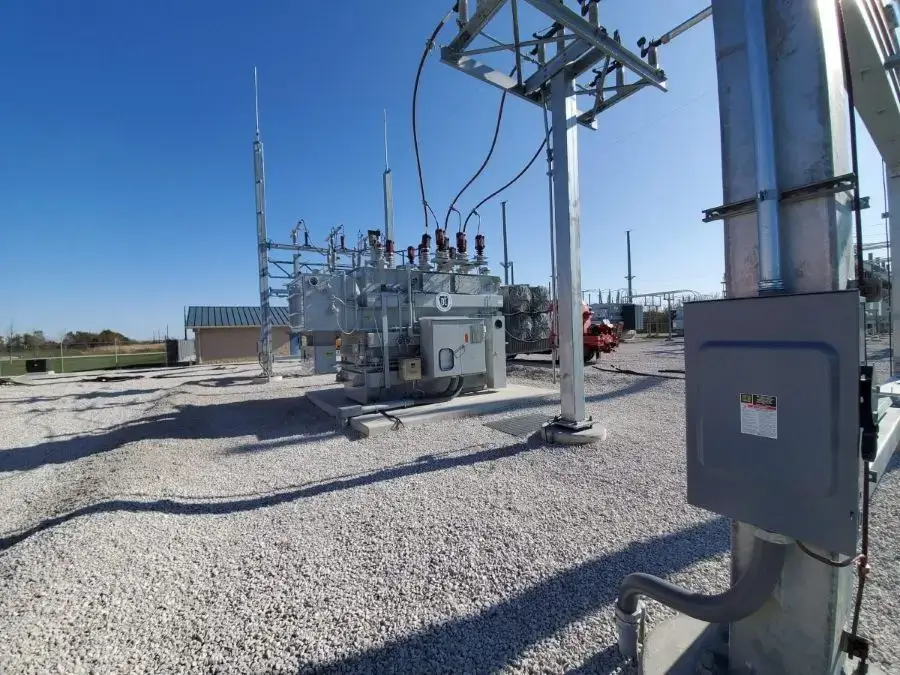
Electrical substations are the backbone of modern power transmission and distribution systems. They play a major role in changing the levels of voltage, ensuring high reliability in power supply and grid stability. As the world grows with more urban, industrial, and renewable energy, there is a huge demand across the world to have efficient and well-built substations. This guide explains the step by step process of electrical substation construction and what challenges are common during the entire process.
Tutorial Guide for Electrical Substation Construction
Step 1: Feasibility Study and Planning
The process of construction takes place by feasibility analysis. This phase involves load demand forecasting, environment evaluation as well as cost-benefit analysis. The engineers evaluate technical, financial and regulatory factors. There is also a need to check accessibility to the site, availability of land and grid connection, as well as expansion in the future. An effective feasibility study guarantees the success of the project, risk reduction, and energy objectives on a national scale.
Step 2: Selecting and Survey
The choice of location is of high importance. Surveys check the soil conditions, topography, water drainage as well as environmental impact. A close connection to transmission lines and load centers minimize expenses. Environmental and geotechnical research assist in creating a secure and sound base. This stage helps to complete regulatory approvals as well as acquire land.
Step 3: Intensive Engineering and Design
This phase comprises designing, electrical, civil as well as structural. Substation construction companies in Pakistan come up with designs of transformers, switchgear, control rooms as well as protection systems. Design encompasses grounding, lightning protection, fire suppression and security. High-level software will guarantee accuracy and effectiveness. The international standards and safety codes are also consider upon.
Step 4: Equipment/ Materials Procurement
Materials should have a quality of reliability as well as durability. Transformers, circuit breakers, isolators, busbars, cables, and control panels are all procured. Vendor selection, quality check as well as logistic planning plays a key role. Effective supply chain management eliminates delays and cost control.
Step 5: Civil Construction and Foundation Work
The physical foundation of the substation is made of civil works. Some of the activities involve clearing of land, grading, drainage systems as well as construction of foundations. Transformers, structures, and buildings should have foundations that withstand the massive loads and environmental factors.
Step 6: Installing Elevators and Other Equipment’s
This phase also involves installation of transformers, switch gear, bus bars as well as protection systems. Heavy-handed engineers make sure that there are proper alignment, insulation and grounding. The installation of equipment is done based on the design specifications and safety standards. Accuracy during this stage guarantees performance in the long run.
Step 7: Control and Protection, and Automation Systems
Digital and automated control systems are used in modern substations. The SCADA, remote monitoring, and intelligent protection add efficiency as well as reliability. The automation reduces the downtimes and increases the fault response. There is also the integration of cybersecurity and communication systems.
Step 8: Testing and Commissioning
Prior to energizing, intensive testing is done. Functional, electrical as well as safety tests perform the maintenance of systems. Calibration of equipment, testing of the relay, and load tests comply. The commissioning process ensures that the substation is safe and efficient.
Step 9: Compliance and Safety
Substation construction is a major concern for safety. Employees adhere to high safety standards, including personal protection and risk control. Environmental and operational safety is achieved through compliance with the local and international regulations.
Step 10: Operation and Maintenance Planning
Regular maintenance is used after commissioning to make sure things are reliable. Predictive and preventive maintenance schemes increase the life span of equipment. Early fault detection of the monitoring systems and minimization of downtimes. Ongoing improvements enhance effectiveness and flexibility.
Common Challenges During Electrical Substation Construction
Various challenges take place during the construction of electrical substations. Topography, environmental limitations and distance to load centers can make site selection a challenge. The scheduling conflict is common when several grid station contractors in Pakistan and pieces of equipment must be scheduled. Late delivery of special material, such as transformers and switchgear, affects deadlines. High-voltage installations are dangerous, and it is imperative that standards are kept at the highest level as far as safety is concerned.
Unexpected conditions on the ground can complicate the foundation work. The weather is a factor that can postpone outdoor construction. Also, the process of connecting the substation and existing grids requires accurate engineering and testing. The additional complexity is provided by regulatory approvals and environmental compliance. All these are crucial factors in ensuring that a successful project execution is planned and executed properly.
FAQs: Common Questions People Often Ask
- What does an electrical substation do?
Electrical substations change the voltage, manage the power and secure the equipment. It also performs reliable and efficient transmission and distribution of electricity over a network.
- What is the average time to build substations?
The period of construction is dependent on the size of the project, the level of voltage, and the complexity. However, project construction normally takes six months to two years, including design and commissioning.
- What are the important safety issues in substation projects?
To protect the workers, equipment and the surrounding communities, proper grounding, insulation, fire protection, hazard control, and rigid adherence to safety standards are necessary.
- What is the role of automation in modern substations?
Automation leads to increased efficiency, remote monitoring capability, better fault detection, downtime reduction, and fast reaction to electrical disturbances and system failures.
Get Ready to Power Your Projects with Industry Leaders
Looking for reliable, cost-effective, and innovative substation construction services? Firm DECON International Private Limited delivers end-to-end solutions, from design and engineering to installation and commissioning. Our expert team ensures safety, efficiency, and compliance with global standards. Whether your project involves transmission, distribution, or smart substations, we guarantee quality and timely execution.