
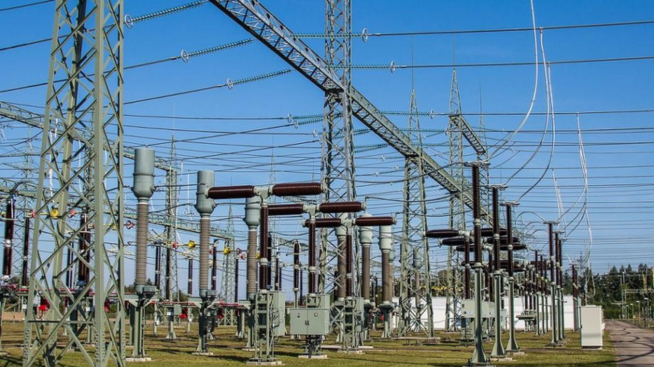
Substations work as primary structures in the power system of electricity. They are essential nodes which regulate, transform, and distribute electricity effectively. These systems raise or lower voltage levels to provide safe transmissions and reliable deliveries to homes, industries and businesses. Talking about the function of substation, it also contributes to stability in the system, circuit breaker protection of equipment and ease of maintenance and fault isolation. In modern power networks, they are necessary since without them, power transmission over long distances would be inefficient, unsafe and often interrupted.
Insights About Key Function of Substation
Substations play a significant role in the functioning of the electrical network. They convert voltage levels into safe levels which are later on transmit and distribute to homes, businesses, as well as industries efficiently. Meanwhile, they share the power with other parts, offer security to equipment via circuit breakers and relays, and allow real-time control and remote management of operations.
Substation construction companies in Pakistan also improve the quality of power with the help of capacitors and reactors, control reactive power as well as stabilize voltage. All these functions ensure a stable, reliable, and safe supply of electricity, which supports modern life and industrial activity and always reduces interruptions as well as improves network functioning.
Main Components of a Substation and Their Purposes
Transformers
Transformers increase or decrease the voltage levels, as required. They make sure that electricity can cover long distances effectively and is not harmful to the consumers. These are available into types such as power transformers, distribution transformers and auto- transformers, each of which is suitable for transmission or distribution needs.
Circuit Breakers
Circuit breakers help to stop power circulation in case of faults. You can use it to cover equipment as well as avoid risks of the electrical network. Hence, they quickly decouple faulty portions of a system, keeping things stable. They are helpful in providing both people as well as infrastructure with safety, minimal downtime and destruction.
Disconnect Switches
Cutting switches isolate an electrical equipment for better inspection and maintenance. They enable the technicians to operate without necessarily closing the whole network. Disconnect switches allows the flexibility of operations and overcome accidents by isolating parts of the substation. It does not affect the continuing of power supply in other parts.
Busbars
Busbars are used to carry electricity in a substation, which is a central point. They link numerous circuits or transformers to divert the power effectively. Busbars are essential in arranging the electric current flow and maintaining a steady operation, for ease of maintaining and extending the substation in the future.
Instrument Transformers
Instrument transformers are precise in the determination of the voltage as well as current values. They give good input signals to meters, relays and control systems. Hence, these transformers are scalable at high voltages and currents, making it possible to monitor and meter precisely.
Protective Relays
Protective relays sense an abnormal electrical state, e.g. overloads or short circuits. They activate circuit breakers when a fault detects any flaw to avoid damage to equipment. These relays will play a critical role in securing the network, reducing downtime, and making the system and people safe.
Capacitors and Reactors
Capacitors and reactors control reactive power within the network. Meanwhile, they enhance the stability of voltage, minimize energy losses and increase the quality of power generally. Hence, they ensure that the electrical system operates effectively and dependably by regulating the variations and upholding a consistent flow to guarantee reliable operation to all consumers.
Types of Substations Based on Structure
Indoor Substations
Indoor substations are constructed within the buildings, which are usually in urban places where space is a constraint. They shield manufacturing and technologies against the weather, minimize noise, and contribute to safety. These small-sized installations help to distribute power reliably in cities and control sensitive electrical elements.
Outdoor Substations
Outdoor substations are exposed to the environment and are typically used in high-voltage transmission lines. They can be easily accessed for maintenance as well as expansion. Outdoor substations are built to resist weather and changes in temperature. They guarantee efficient transmission of electricity at long distances and ensure the reliability and safety of service.
Gas-Insulated substations (GIS)
Gas-insulated substations (GIS) are insulated with SF6 gas, which provides a possibility to have a compact and safety design. They are optimal in cities or space-limited places. GIS reduces maintenance, increases reliability and has high safety standards. Above all, they also deal with high-voltage operations effectively, making it a solution for dense electrical networks in this modern world.
Maintenance and Safety Considerations to Follow
It is essential for the substations to safely and reliably operate, for which they require regular maintenance. Hiring grid station contractors in Pakistan can help you to maintain the system in better condition for long-term. Furthermore, in-depth maintenance involves inspection of transformer oil level, inspection of insulation and wear and tear of protective devices.
Cleaning helps to remove dust, debris and corrosion on equipment to avoid faults as well as enhance efficiency. Relay, circuit breaker and grounding system testing are done to guarantee the functions of the relay and circuit breaker and quick fault reaction.
The safety precautions are essential, in which staff should wear appropriate PPE, observe grounding procedures, and implement lockout-tagout during maintenance. The practices reduce risks, protect employees, prolong equipment life and ensure uninterrupted power supply on the electrical side of the network.
FAQs: Common Questions People Often Ask
- Why is a substation critical?
A substation is a voltage transformer, power distributor, and safety assurance in an electrical network.
- What are the mechanisms of circuit breakers in a substation?
They break power when there is a fault, save equipment and offer electrical protection.
- What is the significance of transformers at substations?
Transformers increase or decrease voltages, which are efficiently transmitted and safely distributed.
- What is the role of protective relays?
The relays sense the abnormal conditions and operate the circuit breakers to avoid damage.
Choose us for Reliable Substation Solutions for a Brighter Future
At Firm DECON International Private Limited, we provide top-tier substation design, installation, and maintenance services. Our expert team ensures efficient power distribution, cutting-edge technology integration, and round-the-clock safety compliance. From industrial substations to renewable energy projects, we guarantee reliable and scalable solutions tailored to your needs.